
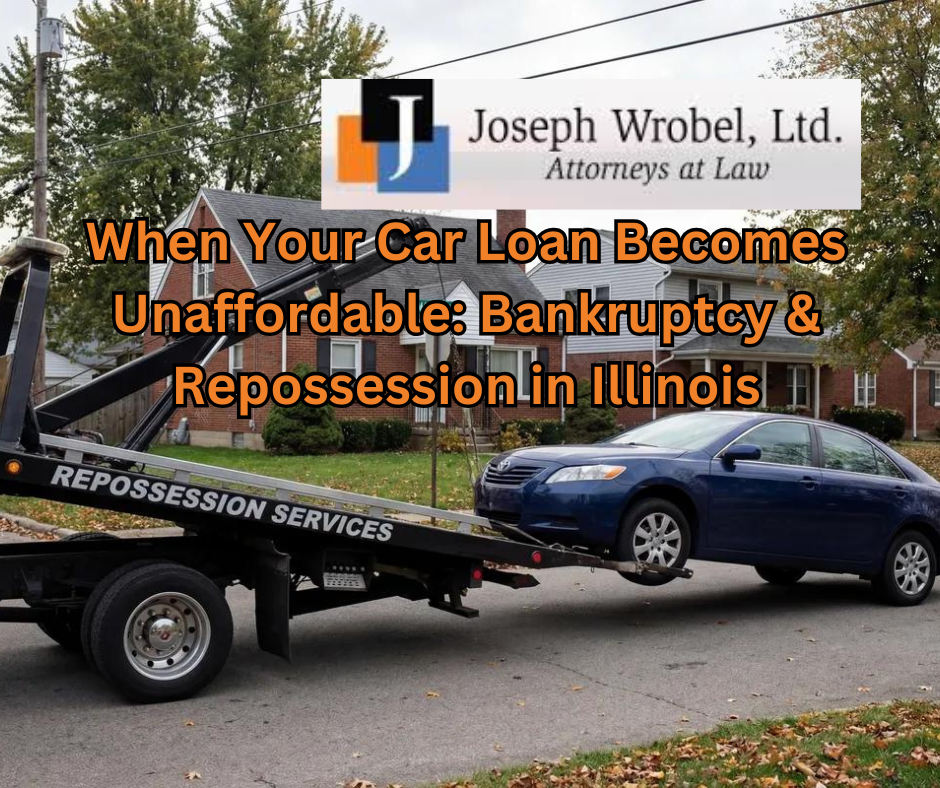
For many people in Chicago and throughout Illinois, a vehicle is not a luxury. It is how they get to work, take their children to school, buy groceries, and handle the basic responsibilities of everyday life. That can make an unaffordable car loan especially difficult. You may need the vehicle, but the monthly payment, interest rate, and other expenses associated with the loan may be taking money away from rent, utilities, food, and other necessities.
A major multistate settlement announced in September 2026 is drawing new attention to the financial problems that can result from unaffordable auto loans. It also raises an important question for consumers who are struggling with car payments: What options do you have when you owe more than you can realistically afford to pay?
A Major Subprime Auto Loan Settlement Puts the Issue in the News
On September 17, 2026, Illinois Attorney General Kwame Raoul announced that Illinois had joined a bipartisan coalition of states in reaching a major settlement with Credit Acceptance Corporation, one of the country’s largest subprime auto finance companies.
The settlement resolves allegations that Credit Acceptance originated certain loans that the states alleged the company knew or should have known consumers could not afford. The Illinois Attorney General’s office said that many borrowers ultimately defaulted on their loans and lost their vehicles through repossession.
The settlement provides hundreds of millions of dollars in debt relief, including relief for certain borrowers whose vehicles were repossessed and for some borrowers who still have their vehicles. It also includes cash restitution and changes intended to address lending practices and the addition of products such as vehicle service contracts and Guaranteed Asset Protection, commonly called GAP products.
Credit Acceptance has denied wrongdoing in connection with the allegations resolved by the settlement.
The case is significant, but the broader problem is not limited to customers of one lender. Consumers throughout Illinois can find themselves trapped between a vehicle they need and a loan they can no longer afford.
Why Car Debt Can Become a Serious Financial Problem
A car loan that seemed manageable when you purchased the vehicle can become difficult after a job loss, reduction in income, medical expense, divorce, or other financial setback. Sometimes the problem is simply the size of the loan itself.
A borrower may also owe considerably more on a vehicle than the vehicle is worth. This is commonly described as being “upside down” on the loan.
Consider someone who still owes $25,000 on a vehicle that is now worth only $15,000. Selling the car does not automatically solve the problem because the loan balance still has to be addressed. Trading the vehicle for another one can sometimes make matters worse if the unpaid balance is rolled into another loan.
Meanwhile, missing payments creates another problem: the possibility of repossession.
What Happens When You Fall Behind on Your Car Loan?
An auto loan is generally a secured debt. The vehicle serves as collateral for the loan. If the borrower defaults, the lender may have the right to repossess the vehicle.
Consumers should not assume that a lender must file a lawsuit before taking a vehicle. The rules governing repossession depend on applicable law and the circumstances, but repossession can happen quickly after default.
This is one reason people struggling with car payments should address the problem before simply ignoring notices and collection calls.
Contacting the lender may sometimes produce alternatives such as changing a payment date, arranging a payment plan, or temporarily postponing payments. Any agreement with the lender should be documented in writing.
But modifying the payment schedule does not necessarily solve a larger debt problem. If the car payment is only one part of overwhelming credit card debt, medical bills, personal loans, and other obligations, it may be necessary to look at the entire financial picture.
Repossession Does Not Necessarily Eliminate the Debt
One of the biggest misconceptions about repossession is that surrendering or losing the vehicle makes the loan disappear.
Usually, the lender sells a repossessed vehicle and applies the proceeds to the debt. If the sale does not produce enough money to cover the outstanding loan balance and applicable expenses, the borrower may still owe the difference.
This is called a deficiency balance.
For example, suppose you owe $20,000 when your vehicle is repossessed. If the lender sells the vehicle for $13,000, there may still be thousands of dollars remaining on the debt after the sale, potentially along with allowable repossession and other expenses.
That means a consumer can lose the car and still receive collection calls or face efforts to collect the remaining debt.
This is where bankruptcy can become particularly important.
Can Chapter 7 Bankruptcy Help With an Unaffordable Car Loan?
Chapter 7 bankruptcy may allow qualifying consumers to discharge many unsecured debts and obtain a financial fresh start. How an automobile is handled depends on the borrower’s circumstances, the loan, available exemptions, equity in the vehicle, and what the borrower wants to accomplish.
Some people want to keep their vehicle and can afford the payment once other debts are eliminated. Others may decide that keeping an expensive or deeply underwater vehicle no longer makes financial sense.
In some Chapter 7 cases, a borrower who wants to keep a financed vehicle may consider reaffirming the debt. A reaffirmation agreement generally means agreeing to remain personally responsible for the automobile debt despite the bankruptcy discharge. That is an important financial decision and should not be made casually.
For someone who no longer wants or cannot afford the vehicle, surrendering it through the bankruptcy process may be an option. Depending on the circumstances, Chapter 7 may also address the borrower’s personal liability for a deficiency balance.
Every case is different, which is why the numbers matter. The value of the vehicle, loan balance, monthly payment, income, and other debts should all be considered before deciding what makes sense.
Can Chapter 13 Bankruptcy Help You Keep Your Car?
Chapter 13 bankruptcy works differently. Instead of the relatively quick liquidation process associated with Chapter 7, Chapter 13 generally involves a court-approved repayment plan lasting several years.
For someone who has fallen behind on car payments but wants to keep the vehicle, Chapter 13 may provide options for dealing with the debt through the bankruptcy plan.
The exact treatment of a vehicle loan can depend on several factors, including when the vehicle was purchased, the amount owed, the vehicle’s value, and the terms of the loan. Bankruptcy law contains specific rules governing secured automobile debt, so consumers should not assume that every car loan can be reduced or modified in the same way.
The important point is that falling behind does not necessarily mean you should wait for the tow truck. Talking with a bankruptcy attorney before repossession may provide more options than waiting until after the vehicle is gone.
What If Your Car Has Already Been Repossessed?
If your vehicle has already been repossessed, timing can become extremely important.
The lender may intend to sell the vehicle, and the legal and practical options available before a sale can be different from those available afterward. If the vehicle has already been sold, you may also have to deal with a deficiency balance.
Do not assume there is nothing left to discuss simply because the car has been taken.
Likewise, do not assume that voluntarily returning the vehicle eliminates your financial responsibility. A voluntary surrender may avoid some aspects of an involuntary repossession, but it does not automatically erase the underlying debt or a possible deficiency.
Look at the Entire Financial Picture, Not Just the Car Payment
An unaffordable car loan is often a symptom of a larger financial problem.
Someone may be using credit cards to buy groceries because too much income is going toward the vehicle. Another person may be making the car payment while falling behind on rent or utilities. Someone else may have several manageable debts individually that have become impossible to handle collectively.
That is why the right question is not always, “How do I save my car?”
A better question may be, “What financial arrangement gives me the best chance of becoming financially stable again?”
Sometimes keeping the vehicle makes sense. Sometimes replacing an expensive vehicle later with something more affordable makes sense. Sometimes negotiating directly with creditors is sufficient. And sometimes Chapter 7 or Chapter 13 bankruptcy provides a more comprehensive solution.
Talk With a Chicago Bankruptcy Attorney Before the Situation Gets Worse
If your car payment has become unaffordable, you do not necessarily have to wait until the vehicle is repossessed or a creditor begins aggressive collection efforts before looking at your options.
Joseph Wrobel, Ltd. helps individuals and families in Chicago and throughout the surrounding area evaluate their debts and understand how Chapter 7 or Chapter 13 bankruptcy may affect car loans, repossessions, deficiency balances and other financial obligations.
The earlier you understand your options, the more informed your decisions can be.
If you are struggling with car payments along with credit cards, medical bills, personal loans or other debts, contact Joseph Wrobel, Ltd. to discuss your financial situation and determine what options may be available under bankruptcy law.